Wednesday, January 30, 2013

My Connections to Play


“Play is often talked about as if it were a relief from serious learning. But for children play is serious learning. Play is really the work of childhood”.

Fred Rogers
American Television Personality
1928-2003

“Play gives children the ability to enter into make-believe allowing them to transform a simple object into a play prop”.

Joan Almon
The Vital Role of Play in Childhood
2003
Below are photos of toys from my early childhood days.
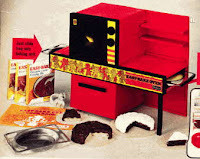


Describe how people supported play when you were younger and/or the role of play in your childhood

As a young child growing up, we were allowed to play most of the time. The only time I did not play was when I was doing homework, sleep or doing my daily chores. During my younger years that’s what children would do go outside and play while the grownups visited with each other.

Write a brief entry on how you feel play today is similar or different from the play in which you engaged as a child and what your hope for young is now with regard to play.

Play is very different from when I was a child. Young children have a variety of toys, games, TVs, computers and many other objects to play with. I hope parents take more control over their young children by showing authoritative strategies that will demonstrate that they are in charge. Also have them to engage in more outside play activities and less time in the house. When I was a child I could not sit around grownups and listen to their conversation. Most parents now want to be their children friend rather than the parent. Parents need to go back to being parents.

Include your thoughts regarding the role of play throughout your life and/or the role of play throughout childhood and adulthood

Throughout my life, I have always been involved in play activities with my children, grandchildren, niece’s nephews and other children as well. Being involved in play has been a healthy tool in my life. I feel as if it has kept me young at heart and abreast of the changing trends.

Friday, January 18, 2013

Relationship Reflection

Relationships are very important to me. Relationships are a tool that combines love ones together. Having a strong and connected relationship with family members and friends is very important and is an amazing experience to be a part of. Being involved in a good relationship with other expresses the way you are and how you can deal with the world around you. A good relationship can also help someone else appreciate you and share your happiness as well.

Relationships with my children and grandchildren are very important to me.


Relationship with my 32 year old son is quite interest to me. He talks about any and everything just as he would talk to his male friends. He is very protective of his mother and calls every day to say I love you. My son and his girlfriend are over every holiday and birthday to celebrate and to tell me how wonderful my cooking is. We don’t get to go out for dinner a lot because they all prefer my cooking.

Relationship with my 30 year daughter is much different from my son. My daughter don’t talk as much, but will listen to what I have to say if it right or wrong. Our relationship is strong and very loving. We share personal business with each other and she values my opinion. My daughter and the grandchildren also visit all holidays and birthdays for family gathering.

The relationship I share with my grandchildren is very positive in many ways. We talks about the bible verses, play games, read stories, watch movies, take long walks and eat out sometimes. My oldest granddaughter is 11 years old and attends Dunbar Magnet School. Her extra curriculum involve dancing, band and baton. On her night to perform one of these tasks, she is expecting grandma to be there for support. She smiles at all of her supporters, but when she sees my face, the smiles get bigger. My 17 months old grand baby is much energized and always babbling about something. She love giving a dance show and afterward she want a hand clap. The relationship the three of us shares is like none others.


My siblings and I have a close and positive relationship. Although all of them but one other lives out of town, we still maintain a close relationship. We all get together every year in the little town where we were born on the 4th of July week. Until that time of year come around, we call one another and everybody ends up on the phone. Our parents bought us up to love, share, communicate and to look out for each other. So we will continue to support each other as best as we can.


I have learned that one of the biggest challenges of maintaining a relationship is to be careful of the words that come out of your mouth. I have witness and seen many relationships break apart because of words that come from the mouth. We have to be very mindful of what is said because we can hurt someone feelings if we are not careful. Another challenges is making time to involve yourself with love ones and enjoying every moment.

Relationships are based on honesty and spending quality time together, whether it is on the phone or through e-mails. When my daughter is working, I make sure that my grandchildren are getting the necessary care they needs. I provide the same instruction their mother provides. This includes getting a meal and homework before taking a nap or watching TV and playing games.

As an active reflective contributor, I will first reflect on my values and feelings before coming in contact with students and their family members. I would get to know each individual child and their parents, because parents can give important information concerning the child upbringings. I would be an advocate for all young learners. The environment would be safe, loving, colorful, and friendly for young children’s growth and development.

Wednesday, December 19, 2012


A Child’s Development

When we think of how young children learn to speak language, the “answers come from three schools of thought, each of which is connected to a theory—namely, behaviorism, epigenetic theory, and sociocultural theory. The first says that infants learn language because they are directly taught, the second that infants naturally understand language, and the third that social impulses propel infants to communicate” (Berger, 2009). Young children’s language development will be guided by all three theories. As Professional, we have to guide young children learning and development.

References

Berger, K. S. (2009). The developing person through childhood (5th ed.). New York, NY: Worth.


A Special Thanks to My Colleagues and Dr. Hampshire:

To my colleagues,
Thanks for all your positive comments on the discussion board and on my blog. The information you all delivered in this class were great and I will carry all of it on to my next courses. Also, I hope I have left an impression on all of my classmates as well. I hope that all of us will be connected in the next course also, but if not good luck to all of you all on your journey.

To Dr. Hampshire,

Thanks you for all the feedback, I don’t think I would have gotten through this course without them and you responded in a timely manner as well. Also, I will like to thank you for the many learning experiences that were provided through different resources, videos and assignments. Your rich skills of professionalism will help guide my colleagues and me throughout the Master Program. Thanks!!!

Friday, December 7, 2012

Testing Young Children's Holistically


Testing Young Children’s Holistically

In my opinion, young children should be assessed and tested according to how they are learning and developing. According to Dr. Howard Garner, there are eight areas parents and teachers can consider for testing young children. These areas includes, “linguistic, logical-mathematical, visual-spatial, bodily-kinesthetic, musical, interpersonal, intrapersonal, and naturalist” (Zeiger, 2012). Testing and assessing intelligence is the best way for educators to get some ideas of what young children know or do not know and teach them accordingly. “All children do not learn the same way, so it is only logical that all children do not test the same way. As one student put it “Some people learn by doing worksheets, some by acting it out, some by sculpting, and some by listening” (Bernard, 2009).

“Every individual has a unique combination of the above traits. While one person may be strong in musical intelligence and weak in naturalistic, another is strong in linguistic. MI tests will help determine areas of natural ability and potential. This can then be used to focus on those subjects in school or to build up weak areas or potential problems. Although these tests will help you determine which areas are strengths for your child or students, the best indicator is often just observing your child. For example, a child with musical intelligence will often make up songs and learn music quickly. With this knowledge in hand, you can help your child in any areas which he might be struggling (Zeiger, 2012).

Testing Young Children Holistically in Africa

Many children have special learning needs, in Africa, young children assessed and tested on the development of holistic method and it is a continual interaction between physical, emotional, social, spiritual, intellectually and cognitive change. The age children are allowed to start to school does not have to correspond with their emotional and intellectual means, but it get more complicated as the age of which children starts to school keep changing. “A South African child may start school at the age of five-and-a-half, provided she turns six by June 30 of her Grade 1 year. But by law, a child must start school by the year in which she turns seven”.

In Africa, “Parents who felt their child was ready for school could apply for admission, provided there was a place for the child and provided she passed a school-readiness test. Two years later, there's a little more clarity around this ruling. Children may now start school if they turn six by the end of June of their Grade 1 year. And, the department stresses, no child may now be tested for school-readiness unless they've already been accepted by the school. Once they've been admitted, however, they'll usually be assessed to determine where they should be placed within the class. The department says denying a child school entry on the basis that they're not deemed "school-ready" is discriminatory. So it's now up to parents to decide when their child should start school within the government's framework”.

In Africa, when assessing and testing young children holistically, you should look at the whole picture to determine a child’s ability to perform which includes.

Visual perceptual skills (being able to process and interpret what you're seeing),

Motor skills include gross motor (which refers to the movements of the large muscle groups that enable a child to kick a ball, for instance) and fine motor skills (which refers to the movements of the small muscles of the hands, wrists and fingers ­- eye-hand co-ordination is a part of this).

Fine motor skills include pencil grip and accuracy of lines. Gross motor skills include balance and ball skills.

Planning involves following instructions, both in terms of fine motor skills ("draw a line from the edge of the page to the circle in the middle") and gross motor skills ("take two steps forward and three backwards"). It also involves planning and carrying out self-initiated tasks.

Emotional readiness is a lot harder to determine, but how children actually handle the tests and the test situation is a useful indicator, says Hosking.

Below are more information and resources on testing and assessing:

Family Education – Questions for parents to answer about their child’s learning styles.

Learning Disabilities MI Test – Test based on age range. Explains at the end what your score means and shows areas of weakness and strength.

Surf Aquarium – Series of simple questions for older kids. Will help determine intelligence types quickly and easily.

Multiple Intelligences – Interactive tests in a variety of languages, including English and Spanish. Fill in your child’s age to receive questions geared toward that age group. Options include 11 years of age and under, 12 to 14, 15 to 16, 17 to 18 and 19 and over.

Personality Max offers a basic multiple intelligences test designed to be completed in 10 minutes. You must create an account to take the test.

Literacy Works’ multiple intelligences test is designed for adult learners, but features questions that relate to children as well. Teachers and parents may also take the test with a specific child in mind.
Resources

Bernard, S. (2009). Elementary school kids show their multiple intelligences. Retrieved from http://www.edutopia.org/multiple-intelligences-immersion-enota

Cassidy, S. (2008). Our children tested to destruction. Retrieved from http://www.independent.co.uk/news/education/education-news/our-children-tested-to-destruction-779790.html

Kohn, A. (1999). From degrading to de-grading. Retrieved from http://www.alfiekohn.org/teaching/fdtd-g.htm

Kohn, A. (2000) Standardized testing and its victims Retrieved from http://www.alfiekohn.org/teaching/edweek/staiv.htm

Ready for school? Retrieved from www.parent24.com/School_7-12/development_behaviour/Read...

Zeiger, S. (2012). Multiple intelligence test for children. Retrieved from http://kids.lovetoknow.com/wiki/Multiple_Intelligence_Test_for_Children

Thursday, November 22, 2012

A Natural Disaster: Hurricane Katrina


A Natural Disaster; Hurricane Katrina
Hurricane Katrina was an extremely stressful time for me and my family. During August, 2005 this disaster bought on pains and heartaches for many peoples. My family and I stayed home because we didn’t think the storm would get too bad. The storm came during the daylight; most of us were sitting by the window watching the wind blow shingles off the neighbor’s houses. My son was lying in my bedroom because his room was next to the big tree in the back yard. My little granddaughter was only four years old at the time, but very frighten of the storm. My daughter and I tried all kind of things to get her mind of the storm. We prayed, try telling stories of different events, offered snacks, and reassured her that everyone would be alright; it worked for a little while.

About thirty minutes later, we heard a loud noise coming from the direction of my son’s room. We all ran to the back of the house, scared and concerned. The big tree had fallen across the house and water was pouring in. My granddaughter was screening and crying and the neighbor was knocking on the door. I picked my baby up and went to the door running. My neighbor stated that he was looking at the tree when it was falling down and he came over to see if we were alright. After he left we all came back into the front room and continue to look out at the storm and pray. I rocked my grandbaby on my lap until the storm was over. After the storm, we all went outside. My daughter and I showed my grandbaby all the trees that were down and explained to her that the storm was gone. Nobody in the neighborhood got hurt. I had over ten thousand dollars of damage, but I was more graceful that God has saved us through this devastated moment.

Stressors in Pakistan

After looking and reading different resources on the impact stressors have on young children development in other country, I founded out Pakistan has a big concern with educational problems. “The crisis is getting very little international attention and thousands of families are struggling without enough food and shelter. The situation is becoming increasingly dire for families living in cramped, temporary quarters with little to no income” (Pakistan, 2012). Along with that the increase of food and healthcare is also one of their biggest challenges as well. Without healthcare and educational experiences, young children learning achievement will decrease; this can cause a serious health concern and a great impact on many families.  
To help support this crisis “Save the Children has worked continuously in Pakistan since 1979 and has served Pakistani children and women as well as Afghan refugee families through relief and long-term development programs. While many development improvements have been made, life for millions of the poorest children and women in Pakistani is still full of hardships” (Pakistan, 2012). Also “Save the Children has worked in Pakistan for over 30 years and moved quickly to launch an emergency response for these families. We are rapidly assessing the needs on the ground and distributing life-saving and life-sustaining supplies such as shelter kits, and food. We have launched an appeal for $9m to reach 200,000 of the most vulnerable children and their families – we intend to be here, working with these families, for at least the next six months” (Pakistan, 2012).
Reference
Pakistan - Save the Children. Retrieved from, www.savethechildren.org › HomeWhere We WorkAsia

Friday, November 9, 2012

Child Development and Public Health


Child Development and Public Health

I think in most cases, public health measures that impact children's development all over the world is the mental health of mothers, fathers, and the widespread of families also. “Children of chronically depressed mothers do not perform as well on thinking and intelligence tests at 18 months of age and this is especially true for boy babies’ speech development” (World Health Organization, 2011). Young children are influenced by the society in which they live in also, a child’ emotion, social, health and physical development are impacted and effected by their social environment. But, we have to continue being an advocate and support them for the well-being of their growth and development at an early age.

According to research, “maternal mental health problems pose a huge human, social and economic burden to women, their infants, their families, and society and constitute a major public health challenge”( World Health Organization, 2011). Research also states that “mental health problems such as depression and anxiety are very common during pregnancy and after childbirth in all parts of the world. “One in three to one in five women in developing countries, and about one in ten in developed countries, have a significant mental health problem during pregnancy and after childbirth” (World Health Organization, 2008). Another “key finding was that men who don’t have access to flexible working hours and family-friendly leave, and have low job security and little control over their workload, are five times more likely to report psychological distress” (fathers, 2012). Therefore, I believe mental depressions and anxiety disorders are a common illness that can happen at any time after birth throughout life all over the world. Some people have mental challenges, but the sign and symptoms are ignored because lack of in-come and medical insurance.

Mental health issues can cause many problems to people of all cultures; this is a serious health concern that may be due to low birth rate, malnutrition, breast-feeding and many other health problems. “Infants of chronically depressed mothers show less sociability with strangers, fewer facial expressions, smile less, cry more, and are more irritable than infants of normal mothers”. (World Health Organization, 2011). And also, “children of depressed mothers are also more distractible, less playful and less social up to age 5” (World Health Organization, 2011). Research have shown that many mental health issues come from lack of care; meaning everyone should come together as a whole to improve the lives of young children and their families. In my future work, I hope to support parents and children of all cultures in finding affordable organizations, and mental health services to provide the necessary treatment that are available to them. “Ensuring they have access to information and support to promote their well-being is very important” (Fathers, 2012).

References

(2012). Recent and Future Research on Fathers and Families ...mcclellandinstitute.arizona.edu/.../recent-and-future-research-f...Cached

World Health Organization. (2008). Improving Maternal Mental Health. Retrieved from World Health Organization: http://www.who.int/mental_health/prevention/suicide/Perinatal_depression_mmh_final.pdf

World Health Organization. (2011). Maternal Mental Health & Child Health and Development. Retrieved from Maternal Mental: http://www.who.int/mental_health/prevention/suicide/MaternalMH/en/index.html

Thursday, November 1, 2012

My Daughter's Childbirth and Childbirth in Paris


My First Grandchild’s Birth, Ariel Starr Cabbil:

Every child birth is different, but there were nothing like watching the birth of my first grandchild. It was a very special time for me. I had all kind of beautiful thoughts and imaginations of how she would look and react when on the outside of the world. In my mind, I thought another little angle crying and breathing the joy of life into this world as my mother, a friend of my daughter and I sat in her room waiting for the final moment.

I remember while at the house, my daughter called out to me and said mommy look. I went into the bathroom and saw that her water had broken, but she didn’t know what was happening. I explained to her that it was time to go to the hospital because the baby is about to be born. After arriving at the emergency room and having my daughter checked out, the doctor also verified that it was time, no going back now. I watched my daughter lying in the hospital bed having labor pains; looking at me saying “mommy tell them to give me something for pain”. I stopped a nurse and ask is it a good time now for her to have the epidural procedure, but due to the fetus breathing pattern and the way she was position, my child was not able to receive the treatment. I was informed that my daughter had to have natural childbirth instead; it was painful for me to watch, but this was her first child and I couldn’t leave her along in the delivery room. About thirty minutes later it was time for the birth of my first grandchild. The medical team enter the room, put her in position and she begin to push until baby Starr enter the world. Ariel Starr Cabbil weighted 5lb, 12oz and 19in long. I must say I didn’t enjoy seeing my only daughter in so much pain, but I knew it a part of entering womanhood. After all that has been said and done, I’m so very happy to have been a part of the childbirth experience.

I choose my daughter first birth delivery because she was quite young and had no experience about having a child and how to take care of one. I knew her father and I had to step up a notch to teach her how to become a loving and responsible parent in taking care of a little infant. We all were so excited about contributing to the care of Starr’s growth and development. Starr is now eleven years old, in the sixth grade and attends Dunbar Performing Art Magnet School in Mobile Alabama.

You can never be prepare enough for childbirth because it’s a once in a lifetime experience; no two births are alike, but maybe similar in pain. The birth of a child influences the parent to become a better self-sufficient and caring role model. Child development has stages to go through like; biological process (motor skills, brain process, etc.), cognitive process (ability to think, use language and intelligence), and socioemotional this is a process where children learn to interact with other peoples without emotional behaviors. Children should be encouraged to learn through reading books, singing songs, and storytelling. We have to invest in the necessary materials to help children learn, grow, and develop. Some children growth and developmental stages are similar, but in most cases, they are different. I see young children as being unique individuals that would build a strong foundation for adulthood later in life.

Childbirth in Paris

I did research on childbirth in another country to compare the different between childbirth in the U.S. for similarities and this is what I founded out. In Paris childbirth procedures are similar; the medical treatment of choice is an epidural. “As soon as a woman arrives at the hospital in active labor” an epidural block is given. In this country if a woman choose to have natural childbirth, “it is crucial” for her to” find a doctor who supports you” (Parisian, 2012).

References

Having a Baby, Parisian Style | Posted in Paris. Retrieved from
postedinparis.wordpress.com/.../having-a-baby-parisian-style/Cached - Similar